| MENU |
|
| MENU |
|
| 19Days | 2 Departures Available |
Our representative will meet you at the Chennai airport and transfer to hotel
The city of Chennai, formerly Madras and originally Madraspatnam, has its roots in a warehouse built by the British on the beachfront in 1639. In 1654, the Fort St. George was established and eventually, village after neighbouring village was added to the territory to form the modern city we know today. In the days of the British Raj, Madras served as the capital of all of South India.
Overnight stay at the hotel
Breakfast will be served at the hotel. Later, proceed for sightseeing around Chennai.
The Neo-Gothic Santhome Basilica is one of the only three basilicas in the world said to contain the relics of an apostle of Christ and is an important Christian pilgrimage. Built over the tomb of St. Thomas, the original building was said to have been established by the apostle himself.
Founded in 1644 by the British East India Company, Fort St George was the engine of trade and commerce that transformed a beachfront hamlet into a modern city. Fittingly, it is now the seat of the legislative assembly of the state of tamil Nadu. The Fort Museum located in the oldest surviving building of the fortress is of particular interest to tourists and has an impressive collection of exhibits spread over ten galleries.
The buzzing Kapaleeswarar Temple with its proud 120 feet tall exquisitely engraved Gopuram is one of the finest examples of Dravidian architecture. Inscriptions from the 13th century and highly ornate stucco work adorn its walls. It’s also the site for the spectacular annual Arubathimoovar Festival, during which a gigantic wooden chariot carrying the main deity is pulled along the roads by hundreds and thousands of frenzied devotees, followed by a procession of gods involving sixty three idols on palanquins. Students of cinema may recall this festival from French master Louis Malle’s Cinema Verite´ venture, Phantom India.
The grand century-old Ripon Building named after Governor Lord Rippon, is today the seat of the Chennai Municipal Corporation.
The Government Museum displays artifacts going back to the prehistoric times. Of particular note are Buddhist scriptures describing the life of The Buddha. The Connemara Library is well -stocked and the National Art Gallery boasts of a fine bronze collections.
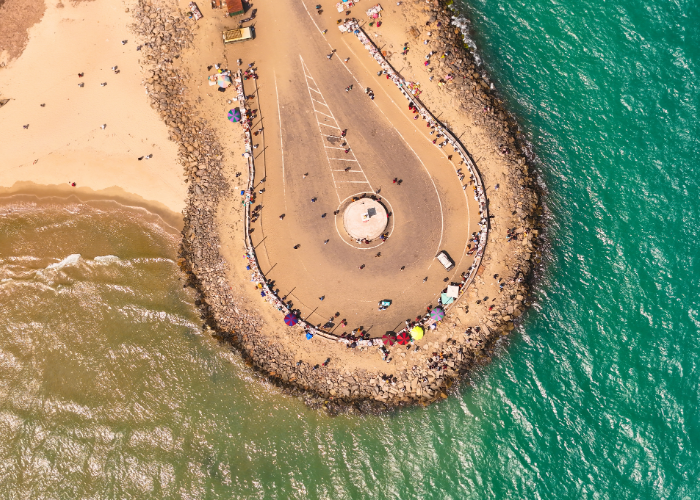
The 13 kilometer Marina Beach is the second longest beach in the world. A lovely promenade stretches out into the horizon along the Bay of Bengal, and is the favorite haunt of the residents of Chennai who throng to the beach in the evenings and mornings, walking, running, biking or taking pony rides. Swimming is prohibited as waters off the coast are extremely rough.
Overnight stay at the hotel
After breakfast, we shall drive to Mahabalipuram, stopping at Kanchipuram on the way.
Once a capital of the Pallava Kings, the thousand year old city of Kanchipuram was famous in the ancient world as a seat of learning. Temples and shrines dating back to the 7th century dot the city, making it an important pilgrimage for both the Shaivaite and Vaishnav sects of Hindusim. Today, Kanchipuram is known the world over for its gorgeous hand woven silk. These exquisite silk saris, or Kanjivarams, are the toast of the cocktail circuit from Kashmir to the Kanyakumari.
Check into hotel at Mahabalipuram.
Mahabalipuram (Mamallapuram) was once the main seaport of the Pallava Empire and is famous for its sculptures, in particular, a series of spectacular freestanding boulders on the beach, carved to resemble small temples and animals. Don’t miss Lord Krishna’s Butter Ball, a spherical boulder placed on a 45 degree incline, seemingly teetering, but stable for centuries. Mahabalipuram is a UNESCO designated world heritage site and one of the highlights of your luxury holiday in exotic South India.
The Mahabalipuram Caves are temples cut out of solid rock. The interior walls are adorned with sculpted scenes from mythological battles, Gods, demons and beasts both real and mythical. Don’t miss the Mahishamardini Cave depicting the Goddess Durga’s battle with Mahisasur, a Minotaur-like buffalo demon.
Krishna Mandapam is the largest rock-cut temple of the area with exquisite bas relief work depicting the life of Krishna, as well as scenes from the daily lives of ordinary people.
The magnificent giant bas relief work of Arjuna’s Penance depicts a scene from the Hindu epic Mahabharata where the hero, Arjuna, performs penance on a river bank in order to win the devastating Pasupata weapon from Shiva. A cleft in the rock has been cleverly used to depict the river. It’s possible to spend hours examining the extremely detailed figures of gods, men, birds and animals that populate the sculpture.
A group of five intricately carved monolithic temples, the Pancha Rathas or five chariots are named after their resemblance to ceremonial temple chariots (rathas). According to the Archeological Survey of India, the naming of this group of temples after the Pandavas, the five heroes of the Mahabharata, is a more recent phenomenon. The structures are probably Buddhist in origin. In spite of their huge size, each ratha is carved from a single rock.One of the oldest temples in Mahabalipuram, the Shore Temple houses shrines to both Shiva and Vishnu. It is on
of the earliest examples of the pure Dravidian style of architecture.
Overnight stay at the hotel
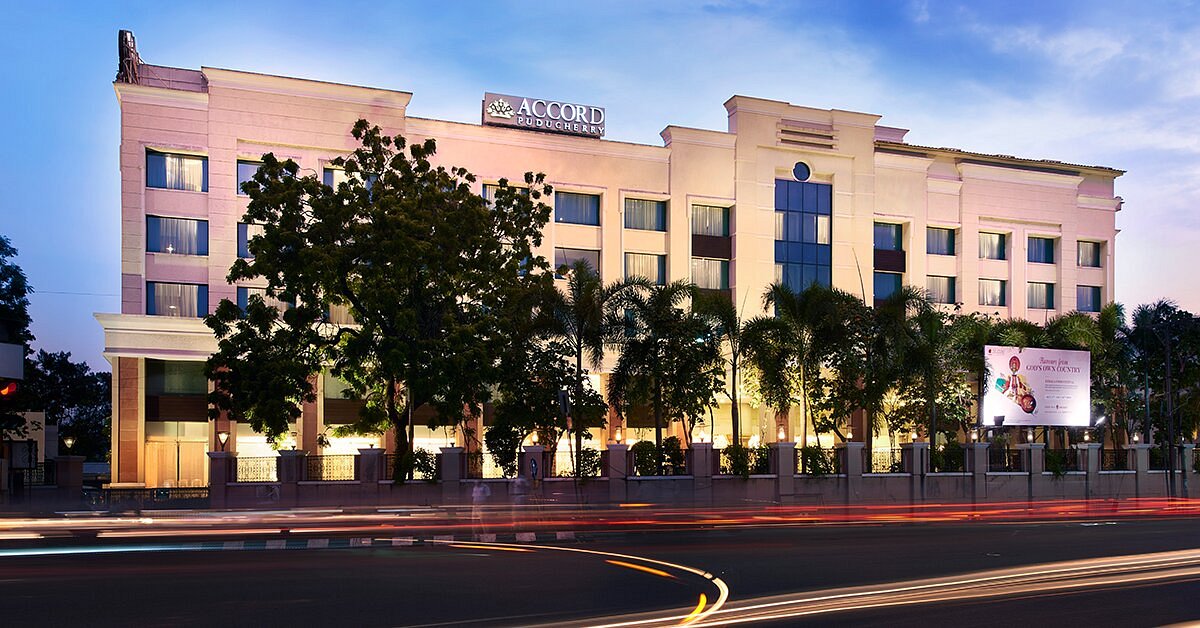
Post breakfast, drive to Pondicherry. Reach and check in at the hotel.
Rest of the time will spend at leisure.
A French colony until 1950, Pondicherry (Puducherry) is markedly different from the rest of Tamil Nadu state in architecture and town planning. Modelled after towns in the French Mediterranean, Ville Blanche or White Town is dotted with colonial villas, while more Indian style buildings populate Ville Noir or Black Town. Today, unlike in the past, both halves of Pondicherry is open to all residents of the city. Use of French is still common in Pondicherry.
You are free to explore the town in the evening.
Overnight stay at the hotel
Breakfast will be at Hotel.
Founded by nationalist turned mystic Sri Aurobindo, Aurobindo Ashram is a commune housing followers from the world over.
The ashram aims to disseminate the philosophy of Aurobindo’s “integral yoga”, a synthesis of ancient mystical thought and modern science.
Overnight stay at the hotel
DAY 06: PONDICHERRY – TANJORE (169KMS IN 04HRS APPROX)
After breakfast, drive to Tanjore.
Tanjore or Thanjavur was the capital of the Chola empire from the 10th century to the 14th century A.D. and was for long periods the political and cultural nerve center of the region. The Great Living Chola Temples that form a UNESCO World Heritage Site are located around Thanjavur, also home to the distinctive Tanjore style of Painting.
You have a little time to relax after checking in at your hotel.
Later, proceed for sightseeing.
The magnificent Brihadisvara Temple is one of the finest examples of Dravidian architecture and is listed as a UNESCO World Heritage site. The Vimana atop the temple is a 60.95m high 13-storey pyramidal tower, in turn crowned by a 70 tonne stone domed monolith.” The inner walls are adorned with murals of Shiva in the 108 mudras, or poses, of Bharatanatyam, the classical Indian dance form.The 16th century Palace of Thanjavur is spacious with large halls, shady courtyards, endless corridors, tall observation posts and a ornate bell tower. It is also home to the Royal Museum as well as the iconic Saraswati Mahal Library.
Saraswathi Mahal Library, established in the early 18th century houses a wealth of manuscripts dating back to the Nayak Kings of Tanjore and its subsequent Maratha rulers. Also of interest are rare European manuscripts like Lavoisier’s Traité Élémentaire de Chimie or Elements of Chemistry and Charles Le Brun’s pictorial charts depicting the evolution of man.
The Thanjavur Art Gallery is also worth a visit for its impressive collection of 250 Chola Bronze statues and 150 stone statues dating from the 9th to 12th century.
Overnight stay at the hotel
After breakfast, drive to Tanjore.
Tanjore or Thanjavur was the capital of the Chola empire from the 10th century to the 14th century A.D. and was for long periods the political and cultural nerve center of the region. The Great Living Chola Temples that form a UNESCO World Heritage Site are located around Thanjavur, also home to the distinctive Tanjore style of Painting.
You have a little time to relax after checking in at your hotel.
Later, proceed for sightseeing.
The magnificent Brihadisvara Temple is one of the finest examples of Dravidian architecture and is listed as a UNESCO World Heritage site. The Vimana atop the temple is a 60.95m high 13-storey pyramidal tower, in turn crowned by a 70 tonne stone domed monolith.” The inner walls are adorned with murals of Shiva in the 108 mudras, or poses, of Bharatanatyam, the classical Indian dance form.The 16th century Palace of Thanjavur is spacious with large halls, shady courtyards, endless corridors, tall observation posts and a ornate bell tower. It is also home to the Royal Museum as well as the iconic Saraswati Mahal Library.
Saraswathi Mahal Library, established in the early 18th century houses a wealth of manuscripts dating back to the Nayak Kings of Tanjore and its subsequent Maratha rulers. Also of interest are rare European manuscripts like Lavoisier’s Traité Élémentaire de Chimie or Elements of Chemistry and Charles Le Brun’s pictorial charts depicting the evolution of man.
The Thanjavur Art Gallery is also worth a visit for its impressive collection of 250 Chola Bronze statues and 150 stone statues dating from the 9th to 12th century.
Overnight stay at the hotel
Drive to Madurai after breakfast, stopping en route at Trichy.
Situated on the banks of river Kaveri, Tiruchirapalli or Trichy is one of the largest cities in the state of Tamil Nadu. In the course of its long and checkered history, Trichy has changed hands many a time, starting off as the capital of the Chola Kings, falling later to the Pallavas and eventually to the Nayaks of Madurai, the Marathas, the Sultanate and finally the British.
Each successive ruling dynasty left their indelible mark on the city, and contributed towards its growth as the flourishing, eclectic urban center that it is today.
Highlights include the Rock Fort, with its “Hall of Hundred pillars” and the island of Srirangam with its giant seven-walled Vishnu Temple.
Rock Fort temple or Malaikottai is a temple carved out of an 80m high rock, the rock itself being of prehistoric vintage and older than the Himalayas. Drive to Madurai and check into hotel.
The ancient temple town of Madurai traces its history as far back as the 3rd century BC, and finds mention in the writings of Greek explorer Megasthenes.
The breathtaking Sri Meenakshi Amman temple, a mini-city in its own right, dominates the Madurai skyline. One of the finest living examples of Dravidian art and architecture, its towering gopurams loom over the city, every inch of its outer surface crowded with multicolored carvings of gods, goddesses and beasts of mythology.
Overnight stay at the hotel
Proceed for sightseeing after breakfast.
According to local lore, the foundations of the Sri Meenakshi Amman temple date back to well over two thousand years. Successive generations of rulers built over and added to the work of their predecessors until the compound grew to its current sprawling size of the 65000 square meters. The square-shaped temple grounds are surrounded by high walls with twelve stupendous Gopurams (temple towers) bidding entry to visitors.
Inside, defying description, lies the Hall of Thousand Pillars, each pillar adorned by exquisitely detailed sculptures of celestial beings. A marvel of ancient Indian design, the pillars align in perfect straight lines no matter which angle they are viewed from. Outside the hall, a corridor is lined by the temple’s famed musical pillars, each of which produces a unique musical note when tapped.
Don’t miss the Thousand Pillar Museum in the temple complex.
The spacious Gandhi Memorial Museum chronicles in loving detail the history of India’s independence movement. The museum organizes regular seminars on Gandhi and his principle of non-violence or ahimsa.
Located a few minutes from Madurai, the Vishnu Temple is one of the most important temples of South India and is unique in the layout of its three altars, arranged as they are one on top of one another. Each altar shows the Lord Vishnu in a different posture. The seated Vishnu on the middle altar, Koodal Azhagar, is the main deity of the temple. The temple’s exterior too, covered with beautiful carvings depicting celestial beings, is well worth the traveller’s time.
Built by King Thirumalai Nayak in 1636, the eponymous Thirumalai Nayak Palace fell to ruin after the king’s demise and was restored only partially by the British. Still, the present day structure gives the visitor a good idea of its grandeur in its heydays. Look out for the intricate stucco work on its arches and pillars and the astonishing Sorgavasal or Celestial Pavilion, a 1300 square meter free-standing structure, unsupported by any pillar or girder.
The giant Vandiyur Mariamman Teppakulam reservoir is fed by a Vaigai River through an invisible maze of underground channels.
During Teppam (tr.The Float Festival), hundreds of boats chockfull of devotees crowd the reservoir in a race to reach the temple at its center.
Overnight stay at the hotel
After breakfast drive to Rameshwaram.
Reach and proceed for sightseeing –
Rameswaram is a town on Pamban Island, in the southeast Indian state of Tamil Nadu. It’s known for Ramanathaswamy Temple, a Hindu pilgrimage site with ornate corridors, huge sculpted pillars and sacred water tanks. Devotees bathe in the waters of Agni Theertham, off the beach east of the temple. Gandamadana Parvatham is a hill with island views. A chakra (wheel) here is said to bear an imprint of Lord Rama’s feet.
Overnight stay at the hotel
Post breakfast drive to Kanyakumari.
Reach and check in at the hotel.
Our visit is to the Sri Kumari Amman Temple. Our next visit is to the Thiruvalluvar Statue; 133 feet in height.
The 38 feet, three tier pedestal of the statue represents 38 chapters in the Book of Aram. We end our exploration with a visit to the miraculous confluence of the three seas; Arabian Sea, Indian Ocean and Bay of Bengal. The Vivekananda Memorial, located at the heart of this confluence is a pilgrimage for all the stressed hearts seeking for some respite and solace.
Overnight stay at the hotel
Post breakfast drive to Kovalam. Reach and check in at the hotel.
Proceed for sightseeing
Kovalam is a small coastal town in the southern Indian state of Kerala, south of Thiruvananthapuram. At the southern end of Lighthouse Beach is a striped lighthouse with a viewing platform. Palm-backed beaches also include Hawa Beach and Samudra Beach.
Heading south, Vizhinjam Juma Masjid mosque overlooks the busy fishing harbor. Inland, Sagarika Marine Research Aquarium displays technology used in pearl production.
Overnight stay at the hotel
The day will be spent at leisure
Overnight stay at the hotel
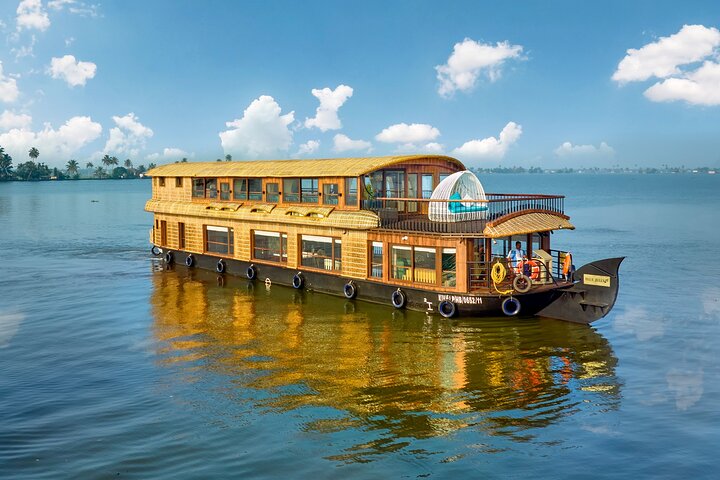
Post breakfast drive to Alleppey and embark the houseboat cruise.
Alappuzha (or Alleppey) is a city on the Laccadive Sea in the southern Indian state of Kerala. It's best known for houseboat cruises along the rustic Kerala backwaters, a network of tranquil canals and lagoons. Alappuzha Beach is the site of the 19th-century Alappuzha Lighthouse. The city's Mullakkal Temple features a traditional design. Punnamada Lake's snake boat races are a well-known annual event.
Overnight stay at the houseboat
Post breakfast drive to Periyar. Reach and check in at the hotel.
On the banks of the Periyar river, amidst coffee plantations and the fragrant cardamom hills, lies the Periyar National Park, one of India’s major wildlife reserves. Look out for the Asian elephant, antelope, the Indian bison, the elusive Bengal tiger, the dhole or wild dog, and the extremely rare and endangered Nilgiri Tahr, a species of ibex native to the region.
Birdwatchers may be rewarded with sightings of greater hornbills, darters, herons, egrets, owls and brightly coloured kingfishers.
Boat ride at Periyar Lake
Overnight stay at the hotel
Post breakfast drive to Munnar. Reach and check in at the hotel.
Rest of time will spend at leisure.
Munnar - Throughout the journey you will enjoy high mountains, unspoiled valleys; scented cool air filled with the aroma of spices and picturesque scenery that surely captivates you. On arrival at Munnar our executive will convey you to hotel/resort. Recline for a while and rest of the day you can explore the beauty of the verdant coffee and tea gardens, delighting panorama and salubrious climate or shopping tea, green tea, coffee, cashew - nuts, homemade chocolates and spices at decent prices at Abbas & Co. Tea Merchants and Green Land Spice Supermarket.
Overnight stay at the hotel
Proceed to the sightseeing of Munnar
Kerala has always been famous all over the world for its spices. The best Kerala dishes are a clever blend of exotic spices and delicate herbs. The chef will introduce you to some of the popular and traditional recipes of Kerala, and make it look easy for you. This would be an ideal activity if you wish to experience the true flavors and preparations of Kerala food in an easy and relaxed manner.
Afternoon we will visit the Tea Museum inaugurated by Tata Tea a major producer of packaged tea so as to keep the history of tea plantation in India intact. The Munnar Tea Museum houses some of the exclusive artifacts like the 'Pelton Wheel' used in the power generation plant, the original Tea roller, and, an ancient rail engine wheel of the Kundale Valley that shuttled men and material between Munnar. Besides this Museum is a tribute to the efforts of all the unsung heroes who were determined to make Munnar a major tea plantation center in Kerala, India.
Optional For those who are interested, a detailed tea tasting experience can be conducted at SpiceTree upon prior request. You will be briefed on the production of tea, and introduced to the different varieties of tea available in Munnar. The session ends with high tea.
Overnight stay at the hotel
Post breakfast drive to Cochin.
Reach and check in at the hotel. Rest of the time will spend at leisure.
Evening Kathakali Dance: A special treat awaits us this evening as we proceed to witness the strength and vigor of Kathakali dance drama, as it enacts episodes from great Indian epics. The extremely stylized gestures, the elaborate make-up, the masks and the splendid costumes of these all-male dancers, recreates an incomparable sense of pageantry.
Overnight stay at the hotel
Post breakfast, proceed for Cochin sightseeing-
The true character of the city is to be found in the older parts of the Fort Cochin area. It more or less exists as it used to be a 1000 years back, when it was first built. The roads have not been widened because the old haggard buildings, through patchwork repairs over the centuries, still stand on the edges. This part of the city reflects an unusual blend of medieval Portugal, Dutch and English country life grafted on to the tropical Malabar Coast.
The fishing community of Cochin is also very interesting. They ancient cantilevered fishing nets called Chinese Fishing Nets. The net is fixed to a pole on the shore. While fishing, the entire net is lowered by a primitive fulcrum mechanism using long bamboo poles. By the same mechanism the pole is lifted along with the catch. We will explore the sights of Photographic as well as cultural interest. We would also visit the 16th century Mattancherry Palace, also known as the Dutch Palace since the Dutch substantially renovated the palace in the 17th century. The double storied quadrangular building surrounds a courtyard containing a Hindu temple. The Central Hall on the first floor was the coronation hall of the Rajas of Cochin; on display are their dresses, turbans and palanquins. The most important feature of this palace, however, is the astonishing murals in the bedchambers and other rooms, which depict scenes from the Ramayana and other religious legends. These murals are u ndoubtedly some of the most beautiful and extensive anywhere to be seen in India. The unique feature here is the unexpected and isolated Jewish community, whose origins date back to AD 52. They are self-contained and have there own Synagogue.The area around the Synagogue, known, as ‘Jew Town’ is one of the main centres of spice trade.
Scores of small firms huddle together in old dilapidated buildings and the air is filled with the aroma of ginger, cardamom, cumin, turmeric and cloves. The area is very busy. The potters are loading gunny bags of spices on to carts, which keep running up and down the narrow lanes. We would visit Jew Town, in the Mattancherry section and a short walk from the ferry is one street long. Jews used to occupy virtually all the houses on Jew Town Road, where they sold fruits, vegetables and spices or worked as oil pressers or carpenters. The spice markets are still located on the narrow street.
Overnight stay at the hotel
Transfer to Cochin airport and board the flight to home country
“Tour ends with memories”
| Date | No. of Nights | Offer Ends | Twin/ Double Sharing Price | Solo Traveller Price | Book |
| 10-10-2026 | 18 Nights | 01-09-2026 | USD2195 | USD3470 | |
| 10-11-2026 | 18 Nights | 15-10-2026 | USD2195 | USD3469 |
Important Note : This group departure requires a minimum of 04 adult participants to operate. If the minimum number is not achieved, guests may either cancel the tour and receive a full refund or continue by paying the applicable supplement, in which case the departure will be operated as a private tour exclusively for them.
Tour Experience Includes: -
Exclusions (Tour Package Does Not Include):-
Plot No. 36, Second Floor, Mohit Nagar, Near NSIT, Kakrola, (Nearest Metro – Dwarka Mor), New Delhi – 110078
Registered Address:61, Shiva Enclave, Block F, Vikas Nagar, Uttam Nagar, New Delhi-110059, India
Stay updated with the latest travel trends & our special offers, delivered straight to your inbox.